


Why is marketing data always such a mess?
Same root cause as your CRM: nobody put quality control on the way in, and every source brings its own fields and formats. A LinkedIn lead, a Meta lead and a direct website signup all land looking different, and nothing forces them into a common shape.
So you end up with the classic mess. The country field says "UK" in one row, "United Kingdom" in the next, "England" in a third, and your filters quietly miss a chunk of the data. Emails that were never validated. Sources labelled five different ways. Bad data isn't data that's wrong, exactly. It's data nobody uses because it's too hard to use, and once people stop trusting it, they stop looking at it.
Bad data isn't data that's wrong. It's data nobody uses because it's too hard to use.
How do you build a data layer you can trust?
Three moves, in order: minimum required fields, enrichment, then consistent formatting. Get those right and everything downstream gets easier.
First, minimum required fields on everything that comes in. If a record can't arrive without a country, a source and a valid email, half your problems never start. Second, enrich what's missing: run records through an enrichment step (Clay or your CRM's own engine) with a rule like "if any of these fields are blank, go and fill them". Third, transform everything into one consistent format: country names or codes but not both, phone numbers with country codes so they're click-to-call, emails validated. Do that and a filter for "UK" captures everything that is the UK, instead of returning nothing because the record happened to say "England".
This is the same discipline we describe for the CRM in why you can't trust your CRM data. The data layer is just that discipline applied to everything, not only the CRM.
Should you track everything in as much detail as possible?
No, and this is where most teams go wrong. Decide what to track in bulk and what to sideline, and resist over-granularising your top-level categories.
Here's the trap. You get excited about detail and split your top level into social-paid-LinkedIn, social-paid-Meta, social-paid-TikTok, social-organic-LinkedIn, and on it goes. Now no single number ever tells you the broad truth. You fixate on the one organic TikTok post that did well and miss that paid social, added together, quietly out-earns all of it.
Keep the top level broad: paid social, organic social, website, GEO and AI citations. Broad categories are what let you make the big decisions ("organic works, paid doesn't, so we shift budget"). Then, and only then, deep-dive inside the category that matters. Granularity is for the second question, never the first.
Which tracking tools do you actually need?
Enough to see the picture, and no more. Set up the sensible ones properly: analytics (GA or similar), cookies set and consented, UTMs and clean URLs so sources resolve correctly. That covers most of what you need, and it's better to run a few tools well than ten badly.
For influence, add the tools that show you've been pushing thought leadership and brand awareness to a segment that sales later closed, so that warming lands in your data rather than disappearing. If you're weighing up how to capture the data reliably in the first place, we went deep on GA4 versus server-side tracking. The rule throughout is restraint: pick tools you'll maintain, not every tool that exists.
Where does AI fit into all this?
After the foundation, never instead of it. Fix your raw data quality and choose your own report categories first, then let AI help. Run it the other way round and AI just gives you confident nonsense faster.
The order I use: look at the broad raw data in the categories I chose, form my own read, and only then look at what the AI surfaces. Often it catches something I missed, which is exactly what it's good for. What it can't do is set the strategy, because AI homogenises towards the average of everything it's seen, and the sharp strategic call is the human bit. AI expands your thinking, it doesn't replace it. We've written more on where AI earns its place in marketing, and the short version is this: it's a brilliant second opinion on a data layer you can trust, and a liability on one you can't.
AI on a broken data layer just gives you confident nonsense faster.
If your marketing data is too messy to trust and you're tempted to throw AI at it, fix the foundation first. Book a free Growth Audit and we'll map the minimum fields, enrichment and categories that turn your data into something you'll actually use.
Frequently asked questions
What is a marketing data layer?
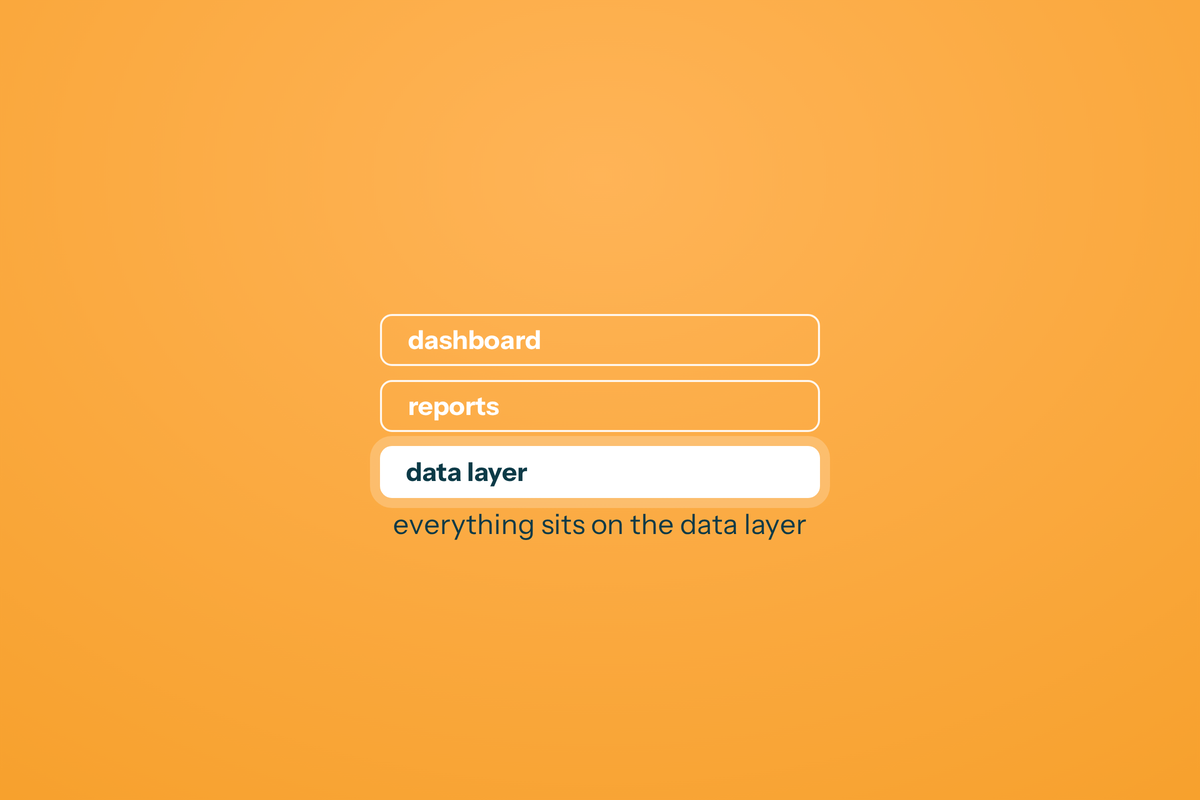
It's the clean, consistent foundation your reporting sits on: every source normalised to the same fields and formats, missing data enriched, sources labelled the same way. It's less a tool than a discipline applied on the way in, so that what comes out is trustworthy.
How granular should marketing tracking categories be?
Broad at the top, detailed underneath. Keep top-level categories wide enough to make big budget decisions (paid social, organic social, website, GEO and AI citations), then deep-dive within whichever one matters. Over-splitting the top level hides the broad truth.
Should I use AI to clean and categorise my marketing data?
Only after you've fixed the raw data quality and chosen your own categories. AI is excellent at catching patterns you missed, but it homogenises towards the average and can't set strategy. Form your own read of the data first, then use AI as a second opinion.
Which tracking tools do I actually need?
Analytics with consented cookies, clean UTMs and URLs, and, for influence, a tool that shows which accounts engaged with your brand before sales closed them. Run a few well rather than chasing every tool on the market.