

How do I know if AEO is working?
Track two things: your citation trend, and the leads AEO quietly drives that show up miscredited elsewhere. That's it. Nearly everyone wants a single clean number, and there isn't one, because the whole mechanism is designed to be invisible. So you triangulate: watch whether you're getting cited more over time, and watch for the demand that AEO creates but that your analytics files under the wrong heading.
The reason this is harder than SEO is that AEO often works without a click. SparkToro's analysis found that the majority of Google searches now end without a click at all. The buyer got what they needed from the answer and moved on. That's a win for you if you were in the answer, but it leaves no obvious footprint, so you have to measure the shadow it casts rather than the click it didn't make.
AEO's best outcomes are the ones your analytics can't see. Measure the shadow, not the click.
How do I track my citation trend?
Use a tool like Ahrefs or Semrush that reports whether and how often you're appearing in AI answers, and read it as a direction rather than a precise figure. Both have brand-visibility and AI-citation tracking now. None of them are exact, and they'll disagree with each other, because they're all sampling a moving target. If you obsess over the decimal you'll drive yourself mad.
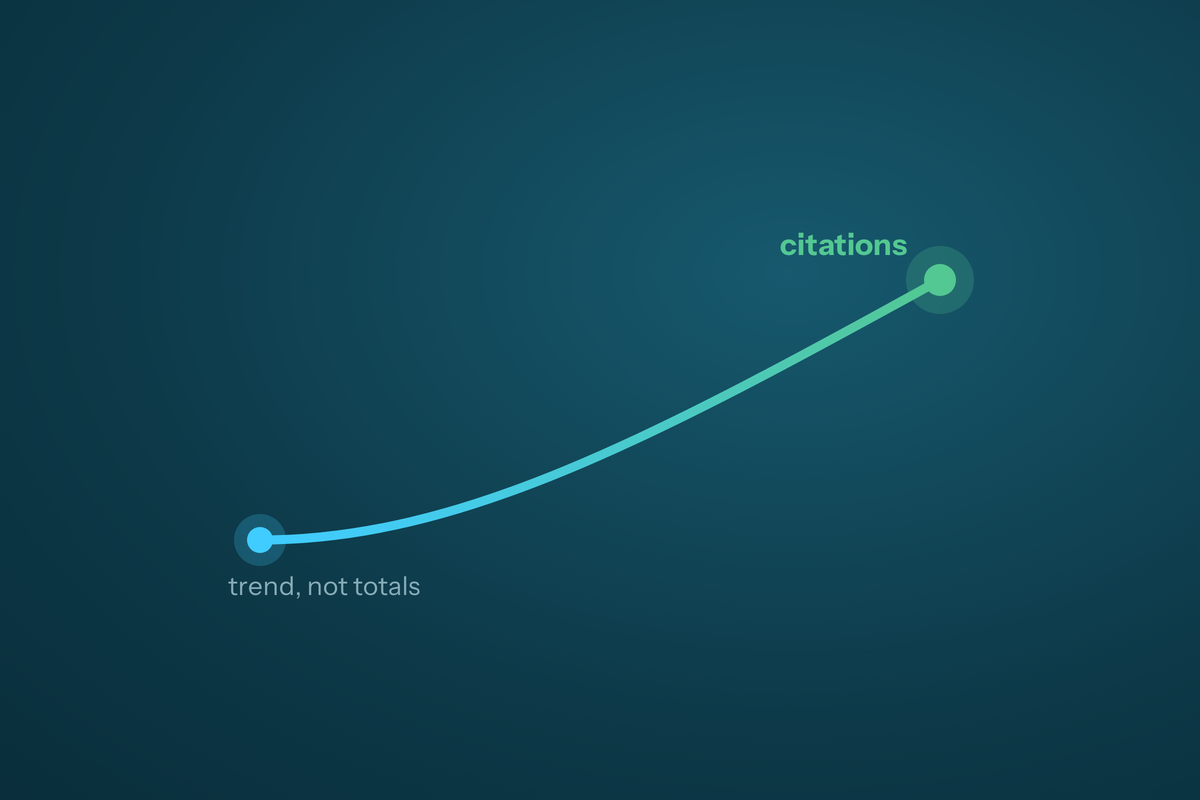
So watch the line, not the number. Are you cited for more of your target questions this month than last? Is the trend up and to the right after you shipped the structure work? That's the signal. The absolute value matters far less than the slope. Set a baseline, ship your changes, and check the direction a month or two later.
Watch the direction, not the decimal. Every AI-citation tool is sampling a moving target, so the slope is the truth, not the number.
How do I catch the leads AEO drives but doesn't get credit for?
Add a "how did you hear about us?" field to your forms, because that's the only place the real story surfaces. Here's the pattern that keeps getting miscredited: someone asks ChatGPT a question, your brand is named in the answer, they don't click, they carry on with their day, and a week later they type your name into Google and land on you directly. Your analytics records a direct or organic visit and gives AEO none of the credit. The lead was created in the AI answer; the last click was somewhere else entirely.
A free-text "how did you hear about us" field catches what attribution can't. You'll start seeing "ChatGPT recommended you" or "saw you mentioned when I asked AI about X" in the answers, and that's your ground truth. It's low-tech and it's the single most useful thing you can add. I've come to trust that field more than most dashboards, because it's the buyer telling you directly what the tracking got wrong.
What does good actually look like?
Good is the citation trend climbing and your direct and organic traffic climbing too, while you've done no extra direct or organic work. That combination is the tell. If you haven't run a brand campaign, haven't published a wave of new SEO content, haven't changed anything on the direct and organic side, and both your citations and your unattributed brand demand are rising in step, AEO is doing the work. The AI answer is planting the name, and the brand search is the harvest showing up under the wrong label.
Be honest with yourself about the counterfactual, though. If you've also been running ads or publishing heavily, you can't cleanly credit AEO for a direct-traffic bump. The clean read is when the only thing you changed was your AEO structure, and the downstream numbers moved anyway. That's when you know.
This is also why measuring AEO and diagnosing it are two ends of the same job; if you're not showing up at all yet, start with why your brand doesn't show up when buyers ask AI before you worry about the trend line. And the whole measurement approach sits inside our AEO, GEO and SEO work, where we set the baseline and watch the shadow with you.
Want help setting a citation baseline and wiring up the attribution so AEO stops getting robbed of credit? Book a free Growth Audit and we'll set up the tracking that shows what your dashboards are hiding.
Frequently asked questions
Can you measure AEO precisely?
No, and any tool that claims to is overselling. AI-citation trackers like Ahrefs and Semrush sample a moving target and disagree with each other, so treat their numbers as a direction, not a decimal. Combine the citation trend with a "how did you hear about us" field for the fuller picture.
Why does AEO get credited as direct or organic traffic?
Because the value is created without a click. A buyer sees your brand in an AI answer, doesn't click, then brand-searches you days later. Analytics records that later visit as direct or organic and gives AEO no credit. A "how did you hear about us" field is how you catch the real source.
What's the single best signal that AEO is working?
Your citation trend and your direct/organic traffic both climbing while you've done no extra direct or organic work. If nothing else changed on those channels and they rose anyway, the AI answers are planting the demand and brand search is where it lands.
Which tools should I use to track AI citations?
Ahrefs or Semrush both offer brand-visibility and AI-citation tracking, and either is fine to start. Pick one, set a baseline before you make changes, and watch the trend afterwards. Don't switch tools chasing a prettier number; consistency of measurement matters more than which tool you chose.