

What happens when you ask ChatGPT your own money question?
Go and do it right now. Open ChatGPT or Perplexity and type the exact question a buyer asks before they hire someone like you. "Best technical marketing partner for a Series A SaaS", "who should I use for a HubSpot migration", whatever your money question is. Read the answer. Look at who gets named.
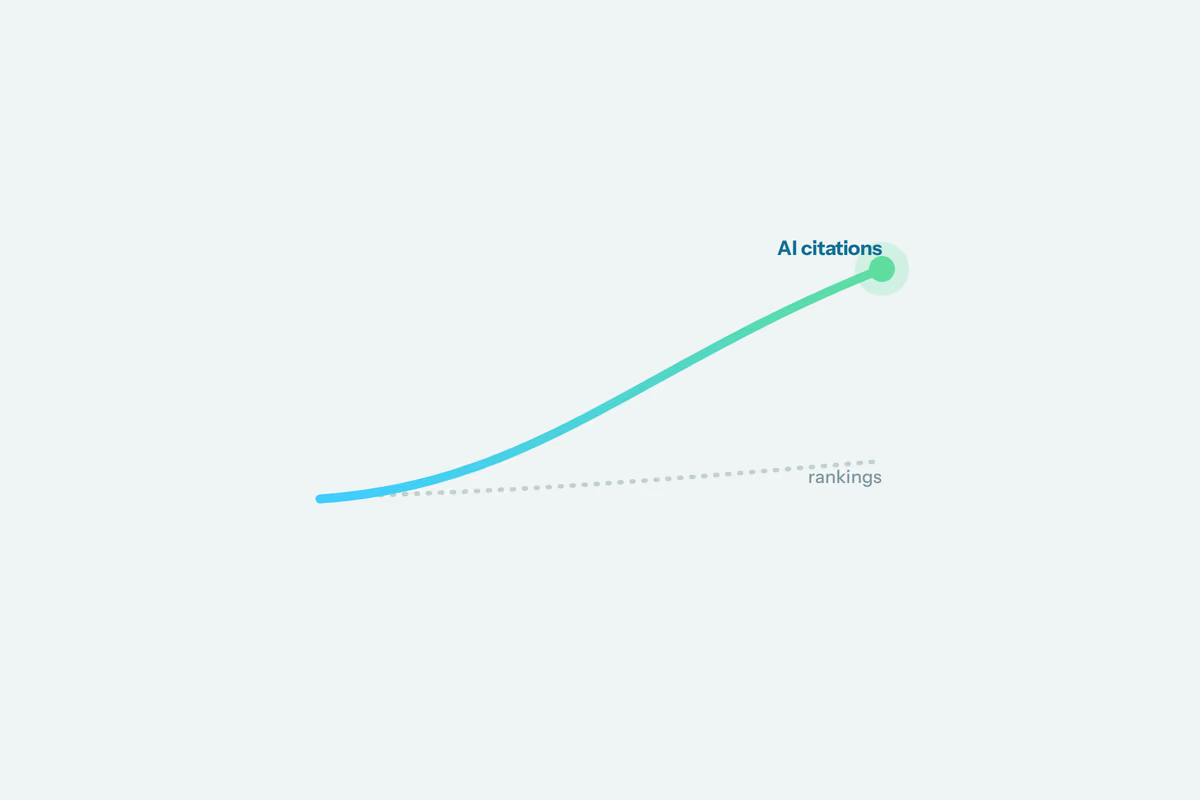
If it isn't you, even though you rank #1 on Google for that phrase, welcome to the uncomfortable bit. You can own the whole search results page and still be completely invisible in the AI answer sitting above it. They're not the same thing, and pretending they are is why so many good businesses are quietly disappearing from the conversation.
Why are ranking and being cited two different games?
Because they reward different signals. Google ranks a page for a keyword. An answer engine lifts a passage to answer a question, and then names a couple of sources it trusts enough to stand behind.
Ranking is about relevance and authority to a query. Citation is about whether a model can (a) find a clean, liftable answer on your page, and (b) back you up without hedging. You can be brilliant at the first and useless at the second. A beautifully optimised, deeply detailed SEO page can be the wrong shape entirely for a model that just wants the answer, up front, in a block it can quote. Different game, different rules. The rankings you already have are a nice signal, they're not the prize anymore.
Why are you invisible to AI? (and the fix that actually moved it)
Usually because your content is written for the old game. It's long, human, detailed, and structured exactly the way classic SEO loved, the slow build, the context, the answer buried somewhere in paragraph six. Models don't want to dig for it.
I've lived this one. We were ranking well for a whole topic hub, genuinely good content, and we were barely showing up in AI answers. Nothing wrong with the writing. It just wasn't formatted for AI. We were still deep in the SEO mindset of answering slowly, humanly, working up to the point.
The fix wasn't technical. It was structural. We restructured every page so it leads with the question, right there in the title, and then a direct answer and a short summary before the article even starts. So a model can lift that block, go "yes, this is right", and then read further into the piece if it needs more. Plus a proper FAQ block on every page. That was it.
"We were ranking well, we just hadn't formatted it for AI. The moment we led every page with the question and a plain answer up top, before the article, we got picked up heaps."
To be clear, this isn't a JSON-LD schema thing. I'm not talking about wiring up markup and hoping. I mean the actual content blocks: question in the title, answer first, summary before the body, FAQs underneath. Just that change in how the content was shaped flipped it. We went from invisible to getting pulled into answers all over the place. Same expertise, same facts, reformatted so a model could actually use them.
So if you're missing from AI, run through the usual suspects:
- The answer is buried. A model has to read 400 words before it hits anything quotable, so it moves on.
- No answer-first summary. There's nothing clean at the top to lift and confirm.
- No FAQs. You're not matching the natural, question-shaped way people actually ask.
- Thin authority. Even a perfect page gets caveated or skipped if nobody off-site backs you up, which is the half most people ignore.
The off-site half nobody mentions: does Reddit really matter?
Yes, more than most people want to admit. Your own pages get you into contention. What decides whether a model names you confidently is everyone else.
Reddit is a huge one. Models lean on it heavily, and being talked about there, genuinely, in the threads where your buyers actually hang out, moves the needle. But it's not just Reddit. G2, DesignRush, directories, the review sites, the mentions, they matter as much as they ever have. It's the same old domain-authority concept dressed in new clothes: other people referring to you builds authority, and authority is what earns you a confident citation.
"It's the same old domain authority. Others referring to you builds authority, and that's what makes AI put you at the top, or at least answer about you without the caveats."
That caveat point is the whole thing. When a model can't back you up, it either drops you or hedges, "there's limited information on them, but…". When lots of credible sources reference you, it can answer about you plainly and put you near the top. Backlinks and references, essentially, are the biggest lever you've got. It's less glamorous than fiddling with your own content, but it's often what separates the businesses that get named from the ones that get caveated.
Practically: seed and nurture a real presence where your buyers talk (Reddit especially), get onto the directories and review platforms that matter in your category, and earn genuine mentions. You can prime some of that with the right tools, even Reddit Ads to build early presence, but it's the organic references that earn the citation. There's no shortcut around being genuinely talked about.
What's the two-week fix list?
You can move the needle fast. Here's the order we'd run it.
- Days 1 and 2: Run the uncomfortable test across ChatGPT and Perplexity for your top 10 buyer questions. Note where you're absent, and where you're mentioned with a caveat.
- Days 3 and 4: Pull the real questions people ask (Semrush, Search Console, and the answer engines themselves), not the ones you assume.
- Days 5 to 8: Reformat your top pages answer-first. Question in the title, a direct answer and short summary before the article, question-shaped headings, an FAQ block on each.
- Days 9 to 11: Audit your off-site presence. Where are you on G2, DesignRush, the directories? Where are the Reddit threads about your category, and are you in them?
- Days 12 to 14: Start earning references. Get listed, get reviewed, get genuinely useful in the threads. Set up citation tracking so you can see movement.
None of it is exotic. It's answer-first content plus real authority, done deliberately.
How do you monitor your AI share of voice?
With a mix of dedicated trackers and your own eyes, because there's no Search Console for answer engines yet. Tools like Otterly.AI monitor which prompts surface your brand and who you're shown alongside; then you manually test the same money questions across ChatGPT and Perplexity, and keep an eye on the Search Console signals that still feed the models.
The point isn't a vanity number. It's to watch your AI share of voice move, which questions you're winning, which you're missing, and where you're still being caveated because your authority is thin. That loop is what turns this from a one-off tidy-up into a repeatable programme. If you'd rather someone ran it with you, content reshaped and authority built, no lock-in, you own the lot, request a quote and we'll start with your money question.
Frequently asked questions
Will my Google traffic drop as AI answers rise?
Some click-through will shift to AI answers, yes, especially for quick, informational queries. The fix isn't to fight it but to be the source the answer cites, so you're still in front of the buyer at the decision point. Rankings and citations both matter; don't trade one for the other.
Do backlinks still matter for AI visibility?
Absolutely, arguably more than ever. It's the same domain-authority concept: others referring to you builds the authority a model needs to name you confidently. Without that backing, you get caveated or dropped. References and mentions are the single biggest lever.
Why does Perplexity cite my competitors and not me?
Usually one of two reasons: your pages don't lead with a clean, liftable answer, or your off-site authority is thinner than theirs so the model trusts them more. Fix the content shape first, then earn the references, Reddit, G2, directories, that close the gap.
Is this just SEO rebranded?
No. It shares roots, authority and good content still matter, but the signals differ. SEO ranks a page for a keyword; AEO gets a passage lifted to answer a question, then trusted enough to cite. Same DNA, different game, different formatting.